Allowed, extra-fee and banned items
What Can You Put in a Dumpster?
Most household junk, furniture, construction and remodel debris, shingles and yard waste can go in a dumpster. Tires, mattresses and Freon appliances cost $50 each. Hazardous chemicals, wet paint and batteries are prohibited. Concrete, dirt, brick and sand go only in a 10 or 15-yard, filled halfway.
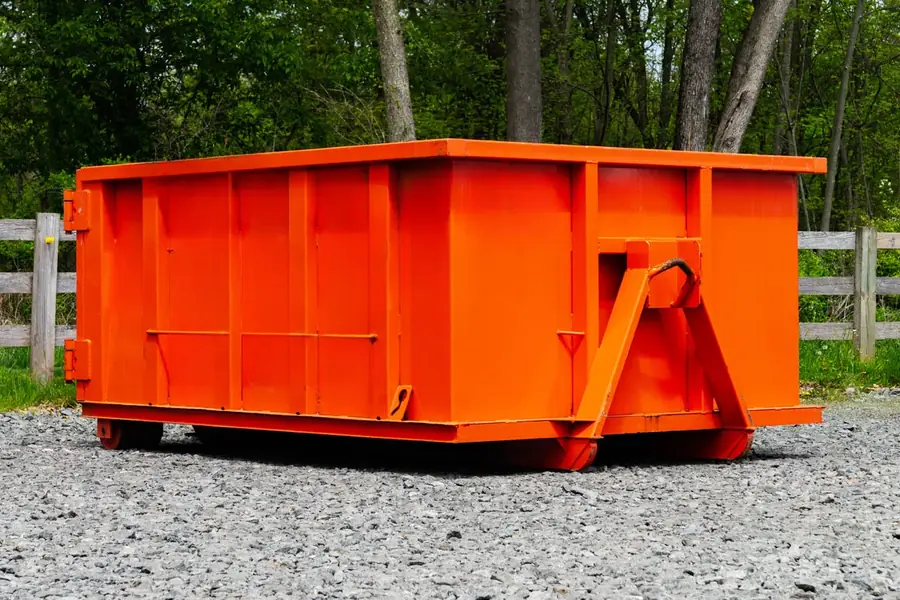
Can I put it in the dumpster? Item by item
Look up any item below. "Allowed" means no extra charge beyond weight. "$50 each" items need special processing at the landfill. "Not allowed" items can't be hauled in a roll-off and need a different drop-off, listed in the last column.
| Item | In a Reid Bros dumpster | Notes or where it goes instead |
|---|---|---|
| Furniture, sofas, tables | Allowed | Break down to save space |
| Household junk, boxes, clothes, toys | Allowed | |
| Drywall, lumber, cabinets, flooring | Allowed | Drywall and tile are heavy |
| Asphalt shingles and roofing felt | Allowed | Size by weight |
| Brush, limbs, leaves, fence boards | Allowed | |
| Concrete, dirt, brick, sand | 10 or 15-yard only | Half full; clean loads get clean-fill pricing |
| Mattresses and box springs | $50 each | Special processing at the landfill |
| Tires | $50 each | Special processing at the landfill |
| Fridges, freezers, AC units (Freon) | $50 each | Refrigerant must be recovered |
| Empty water heater, washer, dryer | Allowed | Drain all liquids first |
| Wet or liquid paint, stain, varnish | Not allowed | Household hazardous waste program |
| Batteries (car, tool, household) | Not allowed | Retailer take-back or hazardous waste program |
| Hazardous chemicals, solvents, pesticides, pool chemicals | Not allowed | Household hazardous waste program |
| Motor oil, fuel, antifreeze | Not allowed | Auto parts store or hazardous waste program |
| Suspected asbestos material | Not allowed | Licensed abatement contractor |
Why do tires, mattresses and appliances cost extra?
Tires, mattresses and Freon appliances cost $50 each because the landfill handles them separately instead of burying them with regular debris. Appliances with refrigerant are the strictest: federal rules require the refrigerant to be recovered first (EPA, 40 CFR 82.155).
Read the rule at ecfr.gov. Count these items when you call so they're on your quote.
Where do I take paint, batteries and chemicals instead?
Paint, batteries, solvents, pesticides, pool chemicals and motor oil go to a household hazardous waste program. Most North Texas cities run a drop-off center or collection day for residents, and auto parts stores take car batteries and used oil.
In Denton, the city's Home Chemical Collection on South Mayhill Road accepts paint, batteries, automotive fluids and garden chemicals from City of Denton residents (cityofdenton.com). Other towns are listed on each service area page.
What items need a different dumpster size?
Concrete, dirt, brick and sand are allowed only in our 10 and 15-yard dumpsters, loaded no higher than halfway up the walls, because of highway legal weight limits. Sod, rock and stumps carry soil and follow the same rule. Everything else can go in any size.
FAQ
Item questions
Can you put a mattress in a dumpster?
A mattress can go in a Reid Bros dumpster for $50, because mattresses need special processing at the landfill. Box springs count as a separate item.
Can you put paint in a dumpster?
Wet or liquid paint can't go in. Take it to your city's household hazardous waste program. Many programs accept latex and oil-based paint.
Can you put tires in a dumpster?
Tires can go in for $50 each. Tire retailers and registered tire facilities also take used tires; Texas tracks scrap tires through the TCEQ.
Can you put a refrigerator in a dumpster?
A refrigerator can go in for $50. Federal rules require the refrigerant to be recovered before an appliance is disposed of, which is why the fee applies.
What happens if a banned item ends up in my dumpster?
Prohibited items may have to come out before the load can be hauled. Keep the dumpster covered or in view so neighbors don't add paint or batteries to your bill.
Not sure about an item?
Call and ask before it goes in. We'll tell you if it's allowed, if it carries a fee, or where to take it instead.